Warranties
  Rebates
  Tax Credits
  Sustainability
  Careers
  Help
Help 



120V vs. 240V Heat Pump Water Heaters: Which One Is Right for Your Home?
July 29, 2026
 Facebook
  X
X  LinkedIn
 If you’re thinking about replacing an aging water heater, you’ve probably come across heat pump water heaters during your research. Known for their impressive energy savings and potential rebate opportunities, they’re becoming a popular upgrade for homeowners looking to lower utility bills without sacrificing comfort.
But one question often comes up early in the decision-making process:
Do I need a 240V connection, or can a heat pump water heater run on a standard outlet?
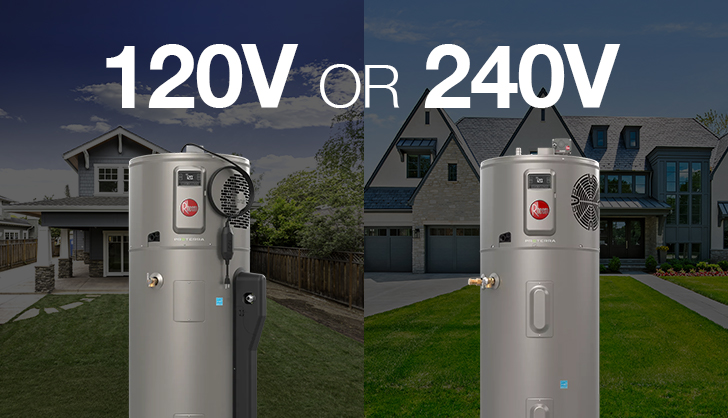
The answer depends on your home’s electrical setup, your household’s hot water needs, and the model you choose. The good news? Today’s heat pump water heaters are available in both 120V and 240V configurations, providing more installation flexibility than ever before.
The Short Answer
Choose a 120V heat pump water heater if:
- You want a simpler installation.
- You’re looking to avoid electrical upgrades when possible.
- Your household has moderate hot water demands.
- Energy efficiency is your top priority.
Choose a 240V heat pump water heater if:
- Your home already has a 240V water heater circuit.
- You have a larger family or higher hot water demand.
- Faster hot water recovery is important.
- You want maximum flexibility during periods of heavy use.
What Is a 120V Heat Pump Water Heater?
A 120V heat pump water heater is designed to operate using a standard household outlet on select models.
This can make installation easier for homeowners who may not have an existing 240V circuit available. Because these models rely primarily on highly efficient heat pump technology, they can provide significant energy savings while minimizing electrical requirements.
Benefits of a 120V Model
- May use a standard household outlet.
- Can reduce installation complexity.
- Helps lower operating costs compared to traditional electric water heaters.
- Supports energy-efficient home upgrades.
- May help avoid the cost of adding a new 240V circuit.
What Is a 240V Heat Pump Water Heater?
A 240V heat pump water heater connects to a dedicated 240V electrical circuit, similar to many conventional electric water heaters already installed in homes today.
These models are often chosen by households with higher hot water demands because they typically offer faster recovery rates during peak usage periods.
Benefits of a 240V Model
- Faster hot water recovery.
- Great for larger households.
- Well-suited for homes with multiple bathrooms.
- Often a direct replacement for an existing electric water heater.
- Handles periods of heavy hot water use more effectively.
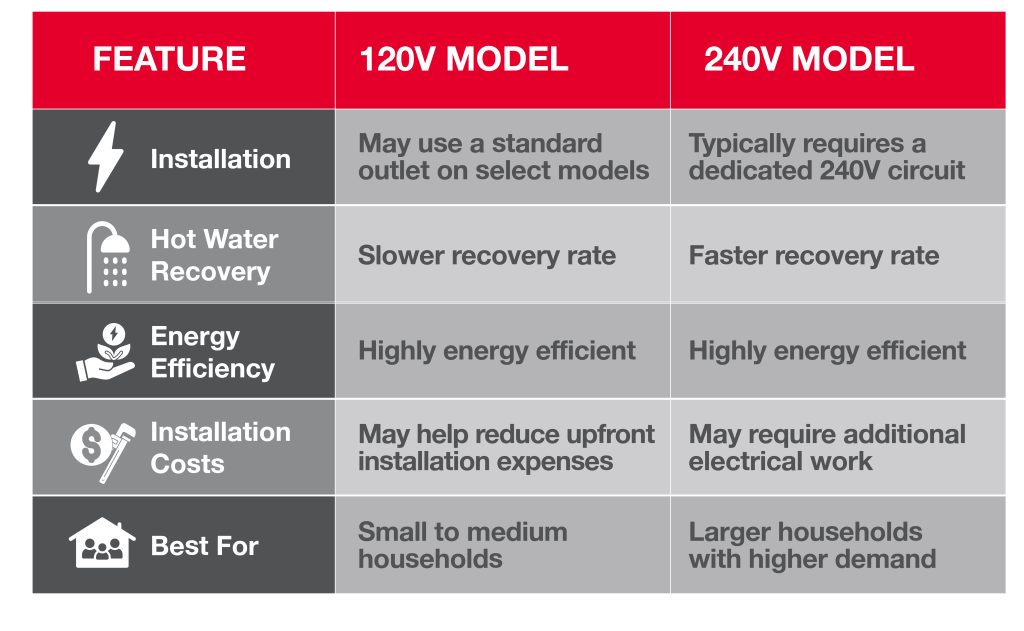
120V vs. 240V Heat Pump Water Heater: Key Differences
Do You Need an Electrical Upgrade?
Not necessarily.
Many homeowners assume installing a heat pump water heater automatically requires major electrical work, but that’s not always the case. Some 120V models are specifically designed to simplify the transition to heat pump technology.
A licensed electrician or qualified installer can evaluate your home’s electrical system and recommend the best option for your situation.
Frequently Asked Questions
Can a heat pump water heater run on a standard outlet?
Yes. Some 120V heat pump water heaters are designed to plug into a standard household outlet, making installation easier in certain homes.
Is a 120V heat pump water heater as efficient as a 240V model?
Yes. Both use the same heat pump technology and can deliver excellent energy efficiency. The primary difference is often recovery speed rather than efficiency.
Do I need a dedicated circuit for a heat pump water heater?
Most 240V models require a dedicated circuit, while some 120V models can operate from a standard outlet. Always follow manufacturer installation requirements.
Which heat pump water heater is best for a family of four?
For many families of four, a 65- or 80-gallon heat pump water heater provides an ideal balance of capacity, comfort, and energy savings.
Will I need an electrician to install a heat pump water heater?
Possibly. An electrician can determine whether your current electrical system supports the model you’ve selected and identify any necessary upgrades.
How much does it cost to upgrade from 120V to 240V?
Costs vary depending on your home’s wiring, electrical panel capacity, and installation location. A licensed electrician can provide a site-specific estimate.
Are rebates available for heat pump water heaters?
Often, yes. Tax credits, rebates from utility companies, and local programs may offer incentives that help reduce installation costs.
The Bottom Line
Both 120V and 240V heat pump water heaters offer exceptional energy-saving potential. The right choice comes down to your home’s electrical setup, your hot water needs, and your installation goals.
If minimizing installation costs and electrical upgrades is your priority, a 120V model may be the perfect fit. If you have a larger household and need faster recovery during busy mornings, a 240V model may offer the performance you’re looking for.
No matter which option you choose, upgrading to a Rheem heat pump water heater can help you enjoy lower energy bills, reliable hot water, and long-term efficiency for years to come.