Warranties
 Rebates
 Tax Credits
 Sustainability
 Careers
 Help


Types of Heat Pumps: How to Choose the Right System for Your Home
November 11, 2026
 Facebook
 X
 LinkedIn
So, you’ve decided to install a heat pump. You’re not alone: Heat pumps outsold gas furnaces in the U.S. for the fourth straight year in 2025.
But deciding which type of heat pump is best for your home? That answer depends more on your house than on the equipment.
Five types of heat pumps are sold for US homes. Two mount outside and use ductwork. One skips ducts entirely. One keeps a gas furnace in the picture. One runs on buried pipe.
Ductwork, floor space, climate, and your electrical panel narrow the field faster than any spec sheet does. A home with no attic and no crawlspace rules out half the list before efficiency ratings enter the conversation.
Each section below covers how each type of heat pump works, the install requirements of your home, and which houses they best suit.
What is a heat pump, and how does it work?
KEY TAKEAWAYS: A heat pump moves heat that already exists instead of burning fuel to create it. Every heat pump runs a refrigerant loop driven by a compressor. Moving heat costs far less energy than generating it, which is why heat pumps carry efficiency ratings above 100 percent.
A heat pump does not make heat. It finds heat that already exists, concentrates it, and delivers it somewhere useful.
The mechanism is a refrigerant loop, the same physics running inside your refrigerator. Refrigerant absorbs heat at low pressure. A compressor raises its pressure and temperature. The refrigerant then releases that heat where you want it.
Run the loop in reverse and the machine cools instead of heating. That reversal is why one heat pump can handle the weather in both January and July, while a furnace only handles January. That reversal is also the whole difference between a heat pump and an air conditioner.
In terms of efficiency, a gas furnace turns fuel into heat and loses some along the way, so it can never exceed 100% efficiency. A heat pump only moves heat that is already there—it doesn’t turn fuel into heat like a furnace. Heat pumps routinely delivers three or four units of heat for every unit of electricity.
Where that heat comes from is what separates the five types of heat pumps. Split systems and packaged units pull it from outdoor air. Mini-splits do the same through a smaller outdoor unit. Geothermal systems pull it from the ground.
What are the main types of heat pumps?
KEY TAKEAWAYS: Five types of heat pumps serve US homes: split systems, packaged units, ductless mini-splits, dual-fuel systems and geothermal. Split systems are the most common and need existing ductwork. Ductless mini-splits require no ducts at all.
The five categories differ in where the equipment sits, whether ducts are involved, and what the install asks of your house.
Three of them are air-source heat pumps, which means that they exchange heat with outdoor air. One pairs an air-source heat pump with a gas furnace. One trades outdoor air for buried loops and a considerably larger up-front bill.
1. Split system heat pumps
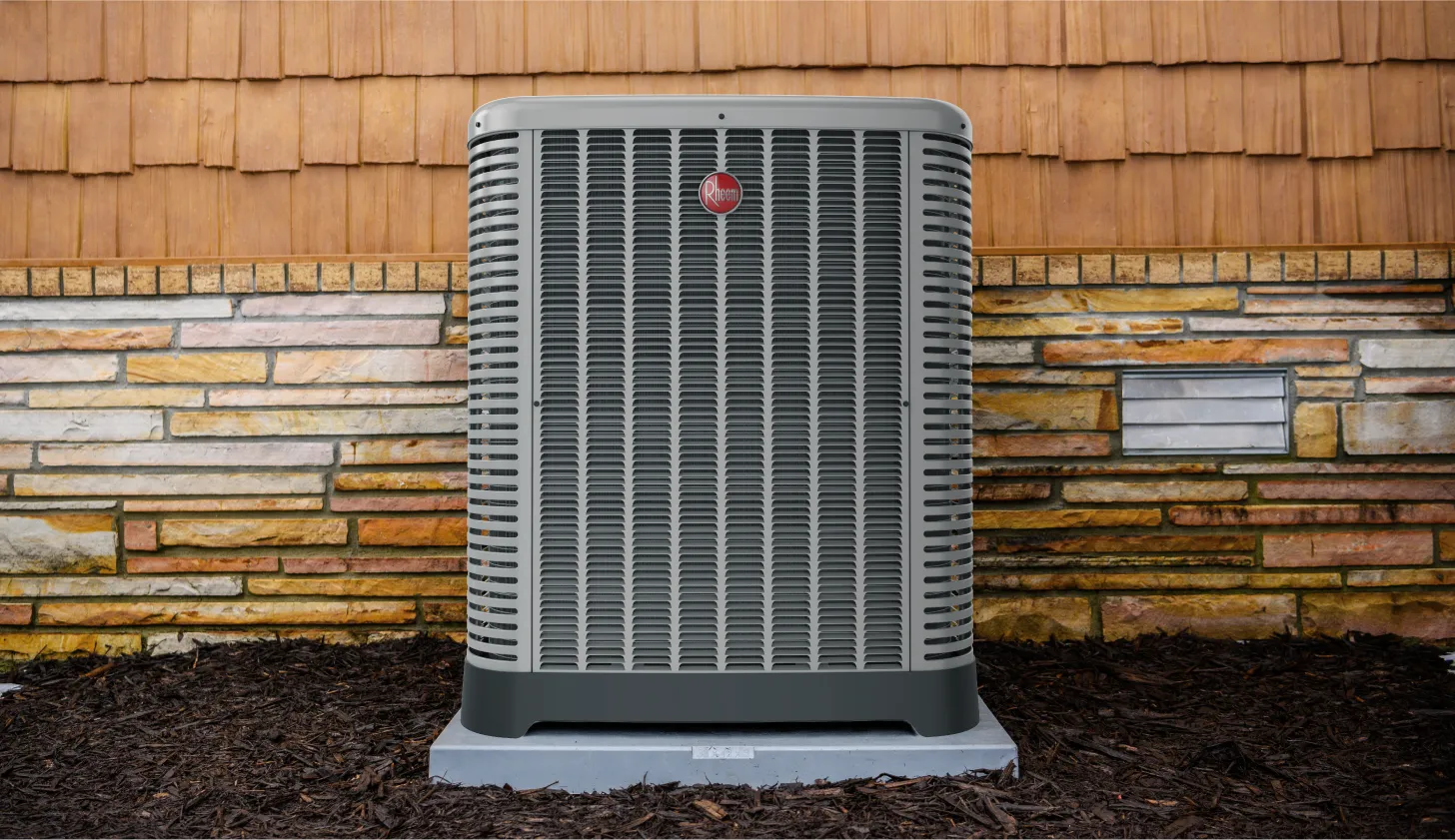
The default configuration and the most common type of heat pump is a split system heat pump, where an outdoor unit holds the compressor and coil. An indoor coil and air handler sit in a closet, attic or basement and push conditioned air through existing ductwork.
One system replaces both the furnace and the air conditioner, which makes split systems the natural fit for a ducted home facing two aging machines at once. Rheem’s residential heat pumps are built in this configuration, including side-discharge models for homes with tight side yards.
2. Packaged heat pumps
A packaged heat pump puts every component in one outdoor cabinet, usually on a rooftop or a concrete pad beside the house. Ducts run from that cabinet into the home rather than from an indoor air handler.
Common across the South and Southwest but rare in the North, packaged heat pumps are often best suited for slab homes with no basement, no attic, and no crawlspace because there is nowhere indoors to put an air handler. Packaged units also free up interior square footage in smaller homes.
3. Ductless mini-splits
Ductless mini-split heat pumps skip ductwork entirely. An outdoor compressor connects to one or more wall-mounted indoor heads through a slim refrigerant line, and each head runs its own zone independently.
Older homes with radiators, additions, garages, converted attics, and sunrooms are all cases where running ducts costs more than the equipment does. Mini-splits also work as supplemental zoning beside a central system. A sunroom that bakes every afternoon can be cooled on its own without dropping the temperature everywhere else.
4. Dual-fuel systems
A dual-fuel system, sometimes called a hybrid system, pairs a heat pump with a gas furnace and switches between them automatically. The heat pump carries the load on mild and moderate days, which covers most of the winter across most of the country.
When temperatures fall past the point where gas becomes the cheaper source, the furnace takes over. Regions that swing between mild spells and hard freezes get the most out of the arrangement. So do homeowners replacing a heat pump but keeping a furnace with years left in it.
5. Geothermal heat pumps
Geothermal systems, also called ground-source, exchange heat with buried loops rather than outdoor air. Ground temperature stays far steadier than air temperature, so heating performance holds up through severe cold.
The tradeoff is excavation. A horizontal loop field or vertical bores cost considerably more up front than any air-source option, and the payback runs long. Rheem does not manufacture residential geothermal equipment.
One more product carries the name and belongs in a different aisle. A heat pump water heater uses the same refrigerant technology to heat domestic hot water rather than indoor air, and it replaces a water heater rather than an HVAC system. Rheem covers heat pump water heaters here.
Should you use a ducted or ductless heat pump?
KEY TAKEAWAYS: Existing ductwork usually decides between a ducted and a ductless heat pump. Homes with sound ducts get lower equipment cost and no visible indoor units from a split system. Homes without ducts avoid a costly retrofit by choosing ductless mini-splits.
This is the fork most homeowners actually stand at, and the answer is usually sitting in the attic already.
If the house has ductwork in reasonable condition, a split system is the cheaper and simpler path. The equipment costs less than an equivalent multi-zone mini-split setup, nothing hangs on the walls, and the air handler hides in a closet.
If the house has no ducts, retrofitting them can be expensive, disruptive and sometimes impossible. Plaster walls, finished basements, and tight joist bays all turn duct runs into a demolition project. Mini-splits sidestep the question.
Leaky ducts complicate the picture. Duct losses in an unconditioned attic waste a real share of what the equipment produces, which is why sealing them first often pays back faster than upgrading the equipment tier.
Zoning is where ductless pulls ahead. Each mini-split head runs its own temperature, so a home office at 68 degrees and a bedroom at 74 degress becomes a setting rather than a fight. Ducted zoning is possible, but it means dampers, controls and more that can go wrong.
Mixed setups are common and often correct. A split system handles the main body of the house. One or two mini-split heads then cover the addition, the garage or the room over the garage that was never comfortable.
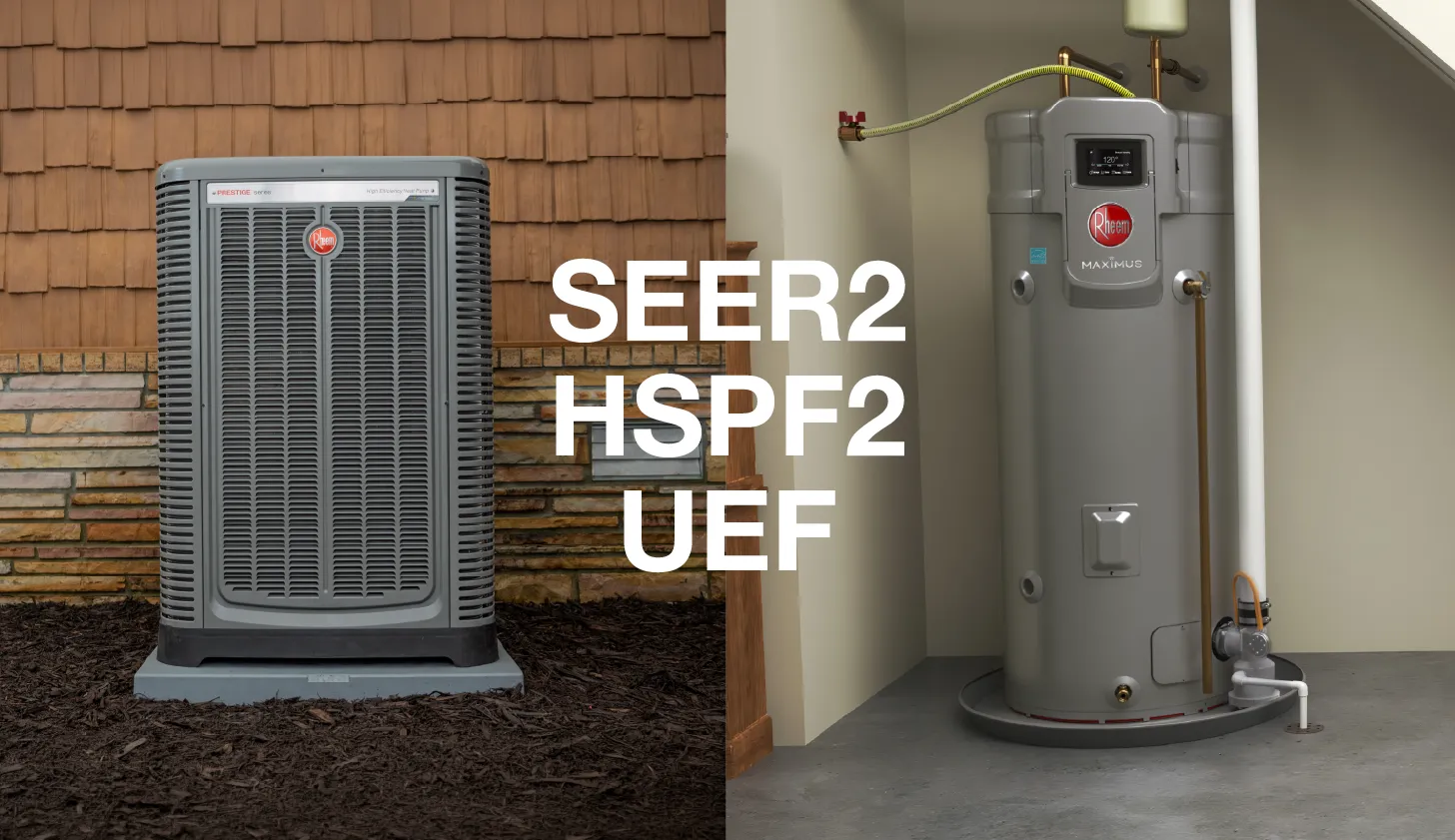
Ratings apply to both. Split systems, packaged units, and mini-splits are all rated with SEER2 for cooling and HSPF2 for heating. Rheem’s guide to common HVAC and water heating unit ratings offers a more in-depth look at common HVAC and water heating system ratings.
What should you look for when comparing heat pumps?
KEY TAKEAWAYS: Comparing heat pumps starts with SEER2 and HSPF2 ratings, then moves to what the house can physically support. Cold-weather heating capacity matters more than peak efficiency in northern states. Rebate eligibility often turns on hitting a specific rating threshold.
SEER2 measures cooling efficiency, and HSPF2 measures heating efficiency. Both are seasonal averages, which means neither tells you how the system behaves on the coldest night of the year.
That gap matters. Two units with matching HSPF2 numbers can perform very differently at 5 degrees. The one that holds capacity is the one that keeps backup electric heat from running up your bill.
After efficiency, the questions turn practical, and most homeowners find the binding constraint is the house rather than the equipment. Panel capacity, clearance, and duct condition decide more installations than brand comparison ever does.
Five things worth checking before you commit:
-
-
- Cold-weather capacity, not just the headline rating. Ask what share of rated heating capacity the system still delivers at your area’s design temperature.
- Electrical service. Removing a gas furnace shifts the whole heating load onto electricity, and an older panel may need upgrading before the equipment can go in.
- Duct condition. Sealing leaks first changes what size system you need and often costs less than the efficiency tier you were about to buy.
- Noise and clearance for the outdoor unit, which matters most on narrow side yards and zero-lot-line properties. Side-discharge models exist for exactly this problem.
- Rebate thresholds. Programs usually name a minimum SEER2 or HSPF2, and a model one tier down can cost you the entire incentive.
-
Check the incentive question before you order anything. Rheem maintains a rebate center and a federal tax credit page listing current programs by product category.
Do heat pumps work in cold weather?
KEY TAKEAWAYS: Modern cold-climate heat pumps deliver useful heating well below freezing, which earlier generations could not. A Rheem residential heat pump held 77 percent of nominal heating capacity at minus 15 degrees Fahrenheit in Department of Energy testing. Dual-fuel systems remain the safer choice where severe cold runs for weeks.
Heat pumps were once recommended only for climates where winter rarely dropped below freezing. That guidance described the equipment of 20 years ago accurately. It does not describe what manufacturers ship today.
The Department of Energy pushed the change along directly. Its Residential Cold Climate Heat Pump Technology Challenge, launched in 2021, set performance targets for centrally ducted electric heat pumps running in northern U.S. and Canadian conditions.
None of that makes an all-electric heat pump right for every cold-climate home. Two conditions still argue for dual-fuel. Electricity rates in some regions make gas cheaper during extended deep cold. And a poorly insulated house loses heat faster than any heat pump can replace it at low outdoor temperatures.
Weatherization moves the math more than equipment selection does. Air sealing and attic insulation lower the load the system has to meet, which shifts the balance point in your favor before you spend anything on hardware. Rheem addresses several of the most common heat pump misconceptions in a separate post.
Emissions run the opposite direction from operating cost. Residential heat pumps cut carbon dioxide emissions by 38% to 53% compared with a gas furnace. On a 20-year global warming potential basis the reduction runs 53% to 67%.
Inside Rheem’s Department of Energy cold-climate testing
KEY TAKEAWAYS: Rheem submitted a residential heat pump to the Department of Energy Cold Climate Heat Pump Technology Challenge and met every requirement. Testing was performed at Oak Ridge National Laboratory. The system kept heating at minus 23 degrees Fahrenheit, well past the point most homeowners assume a heat pump quits.
Rheem sent a nominal 3-ton system to Oak Ridge National Laboratory for Department of Energy’s Cold Climate Challenge, and the laboratory testing confirmed it met all requirements.
The margins are the interesting part, because they describe behavior at temperatures most homeowners assume disqualify a heat pump entirely.
What the testing recorded:
-
-
- Heating coefficient of performance at 5 degrees Fahrenheit came in 5% above the DOE Challenge specification.
- HSPF2 came in 9% above the Challenge specification.
- The system delivered 77% of nominal heating capacity at -15 degrees Fahrenheit.
- Heating operation continued without interruption down to minus 23 degrees Fahrenheit.
-
Which type of heat pump is right for your home?
KEY TAKEAWAYS: Existing ductwork, available indoor space, and winter severity narrow the five heat pump types down to one or two. Ducted homes in moderate climates suit split systems. Homes without ducts suit ductless mini-splits. Severe-cold regions should price dual-fuel against all-electric.
Which heat pump solution is best for your home depends on just that—your house itself.
If you have sound ductwork and moderate winters, a split system heat pump is the straightforward answer. Across much of the South and West, it covers the entire heating season without backup heat.
If you have no basement, attic, or crawlspace, a packaged heat pump is often the only option that fits, because there is nowhere indoors for an air handler to go.
If you have no ducts, ductless mini-splits avoid a retrofit that can cost more than the equipment itself. This also covers additions, garages, and older homes running on radiators.
If you have a newer gas furnace and hard winters, a dual-fuel setup keeps the furnace working for the coldest stretches while the heat pump handles everything else.
If you want per-room control, mini-splits run independently. That solves the bedroom that is always too warm without touching the rest of the house.
One situation argues for waiting. If your current system is only a few years old and still running well, the replacement math rarely works. Rheem’s post on when to repair or replace HVAC equipment walks through that timing.
Talk to a Rheem® Pro Partner®
Which type of heat pump fits comes down to your ductwork, your available space, and how hard your winters run. An independent Rheem Pro can assess all three and price the configurations that actually work in your home.
Frequently Asked Questions
What are the different types of heat pumps?
Five types of heat pumps serve US homes: split systems, packaged units, ductless mini-splits, dual-fuel systems, and geothermal. Split systems and packaged units both use ductwork. Ductless mini-splits need no ducts. Dual-fuel systems pair a heat pump with a gas furnace. Geothermal systems exchange heat with buried ground loops and require excavation.
What is the most common type of heat pump?
Split system heat pumps are the most common type installed in U.S. homes. A split system places the compressor in an outdoor unit and the coil and air handler indoors, distributing air through existing ductwork. Split systems suit any home that already has ducts in sound condition.
What is the difference between a heat pump and an air conditioner?
A heat pump both heats and cools, while an air conditioner only cools. The two run the same refrigerant cycle, but a heat pump can reverse that cycle to bring heat indoors during winter. A home with an air conditioner needs a separate furnace for heating. A home with a heat pump may not.
Do heat pumps work below freezing?
Modern cold-climate heat pumps deliver useful heating well below freezing. In Department of Energy Cold Climate Heat Pump Technology Challenge testing, a Rheem residential heat pump held 77% of nominal heating capacity at -15 degrees Fahrenheit. Heating continued at -23 degrees. Regions with prolonged severe cold often still pair a heat pump with a gas furnace.
Can you install a heat pump without ductwork?
Ductless mini-split heat pumps install without any ductwork at all. An outdoor compressor connects to wall-mounted indoor heads through a slim refrigerant line, and each head heats and cools its own zone. Ductless systems suit older homes, additions, garages, and any space where running new ducts would be costly or impossible.
What is a dual-fuel heat pump system?
A dual-fuel heat pump system pairs an electric heat pump with a gas furnace and switches between them based on outdoor conditions. The heat pump handles mild and moderate temperatures, where it operates most efficiently. The gas furnace takes over during extreme cold. Dual-fuel systems suit regions where winter swings between mild spells and hard freezes.
Is a heat pump water heater the same as a heat pump?
A heat pump water heater uses the same refrigerant technology as a heating and cooling heat pump but does a different job. A heat pump water heater heats domestic hot water and replaces a water heater. A heating and cooling heat pump conditions indoor air and replaces a furnace and an air conditioner.
Are rebates available for heat pumps?
Rebates and tax credits for heat pumps come from federal programs, utilities and state agencies, though eligibility varies by location and equipment. Many programs set a minimum SEER2 or HSPF2 rating, so a unit one tier below the threshold may not qualify. Rheem maintains a rebate center and a federal incentives page listing current programs.