Warranties
  Rebates
  Tax Credits
  Sustainability
  Careers
  Help
Help 



What HVAC Contractors and Plumbers Need to Know in 2026
June 25, 2026
 Facebook
  X
X  LinkedIn
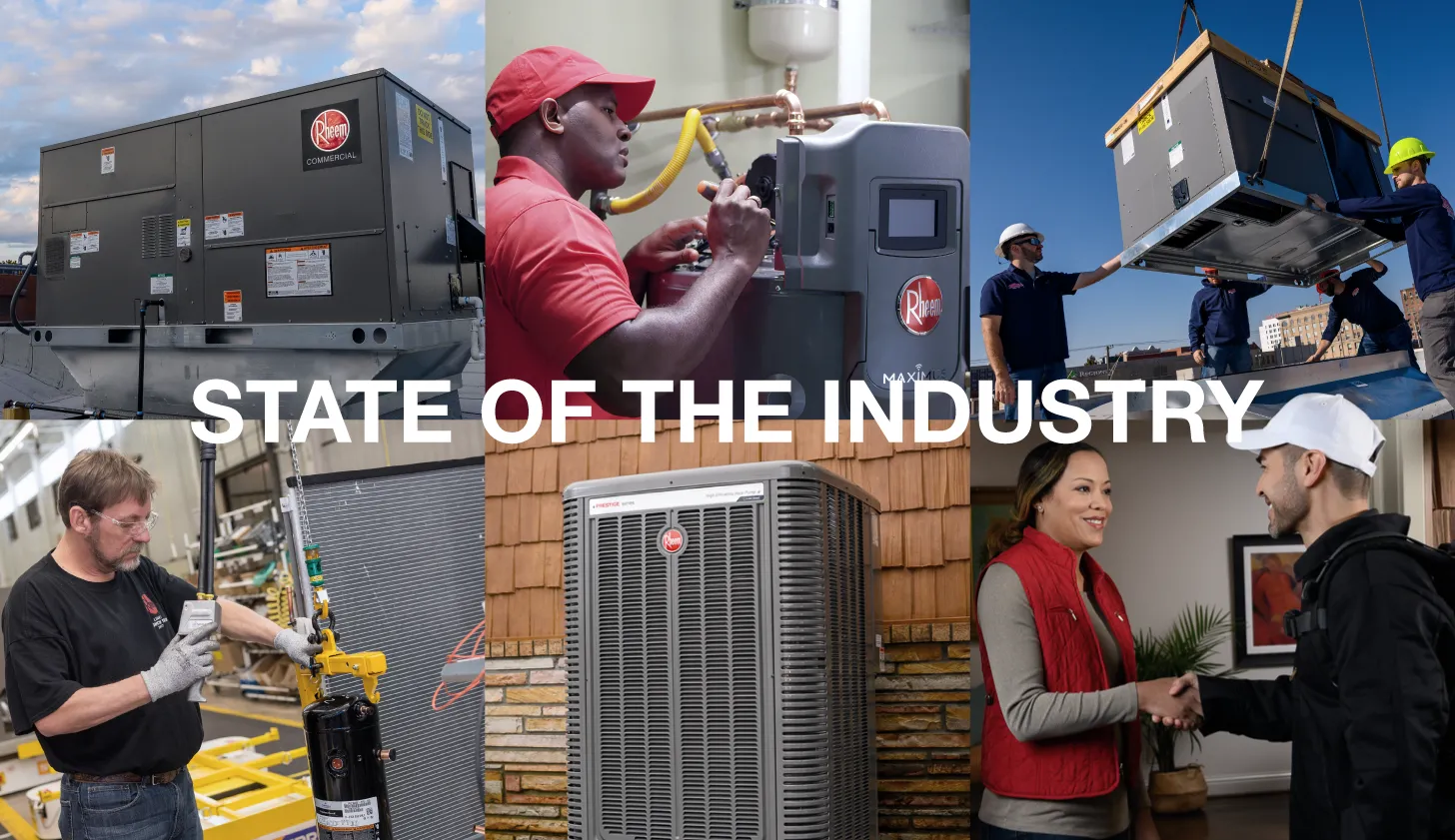
 If there is one thing that you can count on in the heating, cooling and water heating industries, it’s change. New technology, evolving regulations, changing residential and commercial demands—innovation is happening faster than ever before.
Despite changes and challenges, both markets continue to grow. The U.S. HVAC systems market is estimated at $31.7 billion and projected to reach $54 billion by 2033, while the U.S. plumbing industry is valued at roughly $191.4 billion.
“Consumer interest in heat pumps and connected solutions remain strong, and new standards and policy changes continue to encourage homeowners and building owners to consider upgrades sooner rather than later,” says Jeff Stanek, senior vice president and general manager, U.S. Air, Rheem North America. “Both of those factors mean steady demand for our industry despite economic uncertainty and cost pressures.”
Here are some of the biggest industry shifts shaping HVAC and water heating in 2026.
1. Refrigerant Transitions
As of last year, new HVAC equipment must use low Global Warming Potential (GWP) refrigerants. The most common low GWP alternatives are classified by ASHRAE as mildly flammable, or A2L.
Due to their mildly flammable characteristics, A2L refrigerants have been incorporated into standards and building codes to allow for their safe installation. But these refrigerants aren’t new—A2Ls have been in use for years in small HVAC appliances such as window units or packaged terminal air conditioners (PTAC). They have also been used overseas in residential and commercial HVAC equipment.
Moving forward, there will be two primary refrigerants used for comfort cooling: R-454B and R-32. For homeowners whose systems use older refrigerant, they aren’t required to replace it. But they should note that as equipment using A2L’s becomes more prominent, legacy refrigerants may become harder to find and more expensive.
Come 2029, further GWP refrigerant reductions will go into effect as part of the overall HFC phasedown in the U.S. Under the American Innovation and Manufacturing (AIM) Act, HFC production and consumption allowances drop to 30% of historic baseline levels in 2029. The future scarcity is likely to prompt further innovation in low-GWP refrigerants as well as practices to boost reclamation and leak reduction.
2. Water Heating Efficiency Regulations
Water heating is also seeing regulatory shifts. Under the latest update to the Department of Energy’s (DOE) energy conservation standards, sometimes referred to as National Appliance Energy Conservation Act (NAECA) 4, all water heater manufacturers will be required to meet new minimum efficiencies. These new standards are expected to save American households approximately $7.6 billion per year on their energy bills.
So, what’s changing?
The new standards will require gas tank water heaters to increase efficiency by about 8%, while electric tank water heaters with capacities greater than 35 gallons will require an increase in efficiency of about 150%. The change will result in more than 50% of newly manufactured electric tank water heaters using heat pump technology, compared to 3% today.
Compliance will be required starting in May 2029 for the new standards, which means manufacturers like Rheem are hard at work engineering water heating equipment to meet these regulations.
3. Multi-Trade Approach
While the HVAC and water heating industries evolve separately, they are also evolving together. The introduction of programs such as Rheem’s Pro Partner® Heating, Cooling + Plumbing Program highlights the growing increase of a multi-trade approach to help grow contractors’ and plumbers’ businesses.
Complementing Rheem’s existing HVAC and plumbing Pro Partner programs, “this new Pro Partner offering reflects the company’s ongoing commitment to support all types of trade professionals who power the industry,” says Randy Roberts, senior vice president of wholesale at Rheem North America. “By bringing together heating, cooling, and water heating under one enhanced loyalty platform, we’re equipping multi-trade contractors with more tools, stronger incentives, and greater support to help grow their businesses and better serve their customers.”
Contractors see the value, too. An increased number of HVAC contractors have added plumbing and electrical services to their businesses this year, according to the 2026 HVAC Contractor Survey Research Report from the Electric & Gas Industries Association (EGIA).
4. Smart Diagnostics
HVAC and water heating systems are getting smarter and smarter. Many systems now include predictive maintenance, which alerts contractors and homeowners before a component fails—reducing downtime, discomfort, and costs.
For contractors, TotalView™, an all-new platform available to Pro Partners in 2026, helps contractors and plumbers maximize customer service and minimize business costs by giving them one dashboard to proactively monitor, diagnose and manage connected equipment. Benefits of TotalView include:
-
- Visibility: TotalView offers a complete view of all connected devices, alerts and locations in one place.
- Proactivity: Real-time alerts and analytics enable action before problems escalate.
- Efficiency: Remote diagnostics, documentation and insights reduce truck rolls and wasted time.
The Rheem Contractor App also allows for hassle-free diagnostics and servicing. In fact, an MIAT Residential HVAC Competitive Time Study found that the Contractor App allowed for faster diagnostics and repair over other residential HVAC brands.
5. Evolving Homeowner Expectations
As the HVAC and plumbing industry continues to evolve, so do homeowner expectations. Homeowners want more efficient, sustainable home systems. At the same time, they wanted connected equipment that integrates seamlessly into their homes and other home automation systems.
Outside of equipment, homeowners also expect quality, timely service from contractors at every step of the process—scheduling, installation, maintenance tune-ups, servicing, and every moment in between. They do their research and read reviews before letting a contractor into their home.
6. Labor Shortage
The skilled trades continue to face a labor shortage, as aging contractors and plumbers are retiring faster than they can be replaced.
“The industry says we are somewhere around 110,000 HVAC technicians short of being fully staffed,” says Jose De La Portilla, senior manager of education and training at Rheem. “With that shortage and knowing that the average retirement age for technicians is around 65, but the average age of the industry is around 52 to 55, we are going to be hurting in five to 10 years. Even with graduates from trade school programs, we’re running about 20,000 people short a year entering the trades.”
Similarly, reports project that there will be 550,000 unfilled plumbing positions by 2027.
This shortage has big implications for contractors and plumbers trying to grow their business. It means longer response times, especially during peak heating and cooling seasons or extreme weather events. And longer response times can come with a negative overall customer experience, impacting business overall.
Investing in training is one way contractors and plumbers can help mitigate the impact of a labor shortage. Rheem works with contractors and plumbers across the country at its Innovation Learning Centers (ILCs) and virtually through programs such as Rheem Academy to help train the next generation and keep current techs up to date with the latest technology innovations.