Warranties
  Rebates
  Tax Credits
  Sustainability
  Careers
  Help
Help 



New York Refrigerant Regulations for Heat Pump Water Heaters: What Contractors Need to Know Before January 1, 2027
September 14, 2026

 Facebook
  X
X  LinkedIn
 Plan for Tomorrow, Act for Today
The push to increase energy efficiency and reduce greenhouse gas emissions continues to drive change in the residential water heating industry. Rheem® is your trusted source of industry regulatory issues industry regulatory issues and is committed to delivering regulatory updates to keep you prepared and ahead of the curve.
Understanding the new Requirements
On Dec 24, 2024, New York State Department of Environmental Conservation amended 6 NYCRR Part 494, Hydrofluorocarbon (HFC) Standards and Reporting. It sets new global warming potential (GWP) limits for air conditioning, refrigeration and water heating equipment. States like New York are transitioning to new refrigerants to replace older, high-GWP HFCs (like R-134a) to meet modern environmental and regulatory standards.
What Changed in New York’s Refrigerant Regulations?
New refrigerant regulations in the state of New York will advance the development of better technologies to reduce emissions and make these technologies available at a greater scale providing more energy-efficient and cost-effective options to consumers. New York State Department of Environmental Conservation (NY DEC) established a 20-year GWP (GWP20) limit of 10 for “Other Residential HVAC,” which includes factory charged heat pump water heaters (HPWH).
- The NY rule is the first-of-its-kind limits for HPWHs.
- The NY rule is the first to contain ultra low GWP limits for AC, heat pumps, and commercial refrigeration.
Refrigerant Transition at a Glance
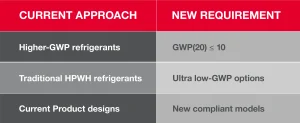
*Current HPWHs can be sold throughout the US except New York state.
What Is the January 1, 2027 Compliance Deadline?
- New York requires residential heat pump water heaters to use refrigerants with a GWP20 of 10 or less beginning January 1, 2027.
- Models manufactured before January 1, 2027 can continue to be sold and installed until January 1, 2028 (1-year following the prohibition date) .
- Models manufactured after January 1, 2027 must meet the new ultra low global warming potential requirements.
*Manufacturing dates limitations are still being questioned with the DEC and subject to change.
How Contractors Should Prepare Today
In addition to the energy savings when upgrading to heat pump water heaters from an electric or gas tank, the regulation would provide potential greenhouse gas emissions reduction, particularly in cooler climates like New York State. Using energy-efficient Heat Pump Water Heaters with ultra low GWP refrigerants means spending less on energy costs and further reduced greenhouse gas emissions. A U.S. Environmental Protection Agency (EPA) analysis found that when broken down by each state’s population, New Yorkers could see up to $540 million in energy cost savings across a variety of home and commercial products and equipment including residential Heat Pump Water Heaters.
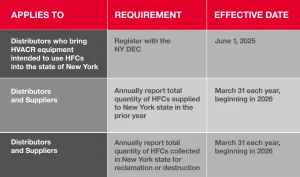
Registration, Record keeping, and Reporting
Benefits of Ultra Low GWP Refrigerants
Ultra low GWP refrigerants will help control emissions of HFCs and substitutes that contribute to global climate change. HFCs have a global warming potential (GWP) – a metric that measures the ability of gases to trap heat in the atmosphere – hundreds to thousands of times higher than carbon dioxide.
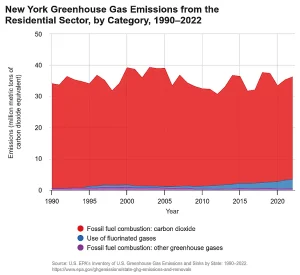
Source link: https://cfpub.epa.gov/ghgdata/inventoryexplorer/
Final Thoughts
Rheem is committed to providing high quality, energy-saving water heaters that work for your business and your customers. New refrigerants are part of New York’s move toward lower-GWP systems, and that transition is here now. For contractors, success will come down to practical execution: understanding the code and making sure the job-site team is aligned before installation begins. Turn to Rheem for products that will not only meet these new standards but exceed them.
Questions Homeowners May Ask
This section is a list of FAQs homeowners may ask to help plumbers explain the new New York state regulatory update.
Will my current water heater still work after January 1, 2027?
Yes. The regulation applies to new equipment sold and installed after the prohibition date. Homeowners do not need to replace a functioning water heater simply because of the new refrigerant requirements. Contractors should verify any specific installation requirements with manufacturers and local regulations.
Why is New York requiring new refrigerants?
New York adopted new refrigerant requirements to reduce greenhouse gas emissions and encourage the use of technologies with lower global warming potential (GWP). The goal is to support long-term climate and energy-efficiency objectives while maintaining product performance.
Will a new compliant heat pump water heater cost more?
Equipment costs may vary as manufacturers transition to new refrigerants and technologies. However, heat pump water heaters are among the most energy-efficient water heating options available and can help reduce monthly energy bills over time.
Will the new refrigerants affect performance?
No. Manufacturers are designing new products to deliver the same reliable hot water performance while meeting ultra low GWP requirements. Homeowners should expect similar comfort, efficiency, and reliability from compliant equipment
What does “GWP” mean?
Global Warming Potential (GWP) is a measurement used to compare how different gases affect the atmosphere. Lower GWP refrigerants have less impact on climate change than higher-GWP alternatives.
Should I replace my water heater before the regulations take effect?
Not necessarily. If your current water heater is operating properly, there is generally no reason to replace it solely because of the upcoming regulation. Homeowners considering a replacement should discuss available compliant options with their contractor.
Will this impact my utility bills?
Heat pump water heaters are designed to use significantly less electricity than conventional electric water heaters. Depending on the model and household usage, homeowners may continue to benefit from lower operating costs while using equipment that complies with new refrigerant requirements.
Are there benefits beyond regulatory compliance?
Yes. New low GWP technologies can help reduce environmental impact while delivering energy-efficient hot water. Homeowners may also benefit from available rebates, incentives, and lower long-term operating costs depending on their location and utility provider.
What should I ask my contractor? When evaluating a new water heater, ask:
- Is this model compliant with New York’s 2027 requirements?
- What refrigerant does it use?
- How much can I expect to save on energy costs?
- Are there rebates or incentives available?
- Is this model sized correctly for my household’s hot water needs?
What does this mean for me as a homeowner?
For most homeowners, the transition will be simple. When it’s time to replace a water heater, you’ll see more products using next-generation refrigerants that meet New York’s environmental requirements while continuing to provide efficient, reliable hot water
Frequently Asked Questions
What refrigerants are affected by the New York rule?
The regulation targets higher-GWP refrigerants and establishes a GWP20 limit of 10 for certain equipment including factory-charged heat pump water heaters.
When does the regulation take effect?
January 1, 2027.
Does this affect residential heat pump water heaters?
Yes.
What is GWP?
Global Warming Potential (GWP) measures how much heat a refrigerant traps in the atmosphere compared to carbon dioxide.
How should contractors prepare?
Work with manufacturers and distributors to transition to compliant products before the deadline.
For more information, see the rulemaking page: www.dec.ny.gov/environmental-protection/climate-change/statutes-regulations-policies/part-494/495-requirements-for-suppliers-and-owners-or-operators
NY DEC factsheet: https://dec.ny.gov/sites/default/files/2025-05/part494factsheet.pdf