Warranties
  Rebates
  Tax Credits
  Sustainability
  Careers
  Help
Help 



What Size Gas Water Heater Do I Need for My Home?
September 2, 2026
 Facebook
  X
X  LinkedIn
 Choosing the right gas water heater size is one of the most important decisions you’ll make when replacing an existing unit or installing a new one. A water heater that’s too small can leave your family waiting for hot water during busy mornings. A unit that’s too large may cost more upfront than necessary and consume more energy than your household needs.
The good news? Finding the right size gas water heater is easier than you might think.
In this guide, we’ll explain how gas water heaters are sized, what factors affect hot water demand, and how to determine the best water heater capacity for your home.
Why Water Heater Size Matters
Many homeowners assume a larger water heater is always better. However, the goal isn’t simply to maximize capacity. It’s to match your household’s hot water usage patterns.
The right-sized water heater helps:
- Provide enough hot water during peak demand periods
- Improve energy efficiency
- Reduce operating costs
- Extend equipment life by avoiding excessive cycling
- Deliver consistent comfort for everyday tasks
When sizing a gas water heater, the most important consideration is your household’s peak hot water demand, not just the number of people living in the home.
How Are Gas Water Heaters Sized?
Traditional gas storage water heaters are typically sized by their tank capacity, measured in gallons.
Common residential tank sizes include:
- 30 gallons
- 40 gallons
- 50 gallons
- 55 gallons
- 75 gallons
However, tank size alone doesn’t tell the whole story.
Gas water heaters are also rated by their First Hour Rating (FHR), which indicates how many gallons of hot water the unit can deliver during the busiest hour of use.
The First Hour Rating combines:
- Stored hot water in the tank
- Recovery rate from the gas burner
Because gas water heaters recover hot water quickly, two units with the same tank size may provide different amounts of hot water depending on higher or lower BTUs burners and efficiency.
Estimate Your Household’s Peak Hour Demand
To determine the right water heater size, estimate how much hot water your household uses during its busiest hour.
Consider activities that may occur simultaneously:
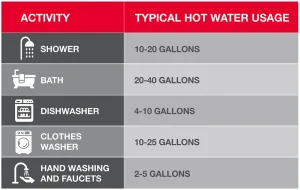
Example
A family’s busiest morning might include:
- Two showers: 30 gallons
- One load of laundry: 20 gallons
- Kitchen use: 5 gallons
Total Peak Demand = 55 gallons
In this scenario, the homeowner should look for a gas water heater with a First Hour Rating of at least 55 gallons.
Recommended Tank Sizes by Household Size
While every home’s usage patterns differ, these general guidelines can help narrow your options.
1 to 2 People
Recommended tank size: 30 to 40 gallons
Typical uses:
- One bathroom
- Limited simultaneous hot water use
- Small homes, apartments, or condos
2 to 4 People
Recommended tank size: 40 to 50 gallons
Typical uses:
- One to two bathrooms
- Multiple daily showers
- Regular dishwasher and laundry usage
4 to 5 People
Recommended tank size: 50 to 55 gallons
Typical uses:
- Two or more bathrooms
- Back-to-back showers
- Increased laundry and kitchen demand
5+ People
Recommended tank size: 75 gallons or tankless (see below)
Typical uses:
- Large families
- Multiple bathrooms
- Significant simultaneous hot water demand
Other Factors That Affect Water Heater Sizing
Household size is important, but it’s not the only consideration.
Number of Bathrooms
A home with three bathrooms often needs more hot water than a similarly sized home with only one bathroom.
If showers are frequently used at the same time, consider sizing up.
Large Soaking Tubs
Spa tubs and oversized bathtubs can use significantly more hot water than standard tubs.
If your home includes luxury bath fixtures, a larger tank may be beneficial.
High-Demand Appliances
Homes with:
- Large-capacity washing machines
- Multiple dishwashers
- Luxury showers with multiple shower heads
may require additional water heating capacity.
Future Household Changes
If you’re anticipating a growing family, frequent guests, or home additions, it may make sense to choose a model that accommodates future demand.
Storage Tank vs. Tankless Water Heaters
If your household frequently runs out of hot water, it may be worth considering a tankless gas water heater.
Unlike storage water heaters, tankless models heat water on demand and are sized according to flow rate rather than tank capacity.
Benefits of tankless water heaters include:
- Continuous hot water
- Space-saving design
- Potential energy savings
- Longer service life
For households with high simultaneous demand, it’s important to properly size a tankless system based on the number of fixtures that may operate at the same time.
Signs Your Current Water Heater May Be Undersized
You may need a larger water heater if you regularly experience:
- Hot water running out before everyone’s shower is finished
- Temperature fluctuations during peak use periods
- Waiting for the water heater to recover after heavy use
- Increased household hot water demand since the original installation
If any of these issues sound familiar, it may be time to evaluate your current water heater’s capacity.
Find the Right Rheem Gas Water Heater
Selecting the right water heater based on gallon capacity and FHR helps ensure reliable hot water, lower energy costs, and greater comfort for years to come.
Whether you’re replacing an aging unit or upgrading to meet your family’s changing needs, Rheem offers a wide range of gas water heaters designed to fit different household sizes and hot water demands.
From high-efficiency tank models to advanced tankless systems, Rheem can help provide the right amount of hot water when and where you need it.
Need Help Choosing?
Consult a professional plumber to determine the ideal water heater size for your home’s specific hot water usage patterns. You can find a local, independent plumbing professional in your area here: https://www.rheem.com/find-a-pro