Warranties
  Rebates
  Tax Credits
  Sustainability
  Careers
  Help
Help 



Water Heater Lifespan: When to Repair vs. Replace
March 25, 2026
 Facebook
  X
X  LinkedIn
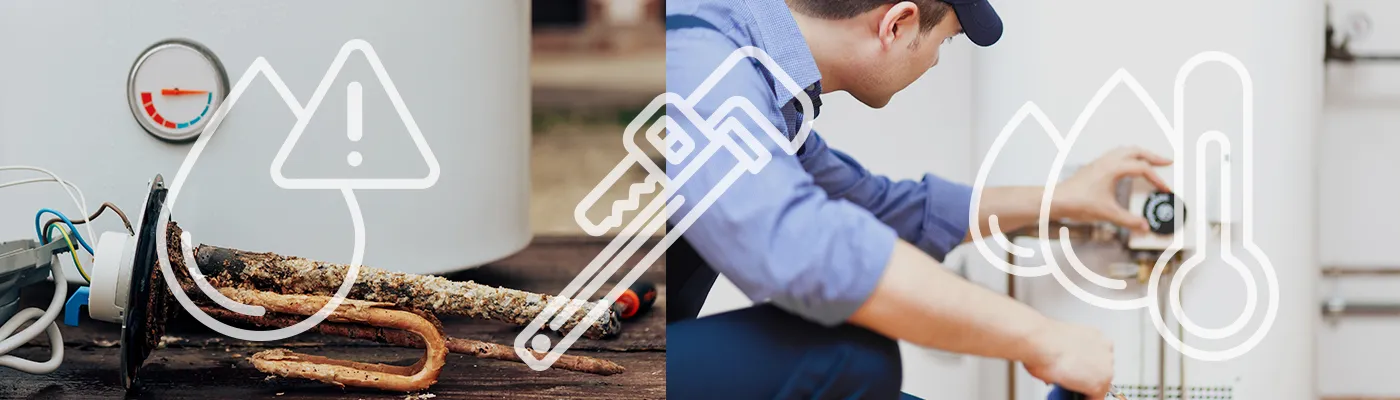
 Your water heater works hard every day. It’s easy to take it for granted until something goes wrong, and then you’re faced with a decision: repair it or replace it. The right answer depends on your unit’s age, the nature of the problem, and how repair costs compare with replacement costs.
How Long Does a Water Heater Typically Last?
Water heater life expectancy depends on the type of system you have. Traditional tank water heaters typically last 8–12 years, while tankless water heaters can last 15–20+ years with proper care. The difference comes down to how they operate: tank systems continuously heat and store water, putting ongoing stress on internal components, while tankless units heat water on demand and wear more slowly as a result.
Beyond system type, hard water, heavy household demand, and skipped maintenance all accelerate wear. Knowing your unit’s age is the starting point for any repair-or-replace decision. The manufacture date is often encoded in the unit’s serial number.
Signs Your Water Heater Should Be Replaced
Some problems point to a failing unit, not just a worn part. If your water heater is 10–15+ years old and experiencing recurring issues, that age alone is a strong signal. Other clear signs include water leaking from the base of the tank, rusty or discolored hot water, and persistent rumbling or popping sounds caused by hardened sediment on the tank floor.
A useful rule of thumb: if repair costs exceed 50% of the price of a new unit, replacement is almost always the better investment. The same applies if you’ve needed multiple repairs in a short timeframe. That pattern suggests broader internal wear that a single fix won’t resolve.
When Does a Water Heater Repair Make More Financial Sense?
Repair is often the right call when the system is relatively young, and the issue is limited to a replaceable component. Heating elements, thermostats, and anode rods are all designed to be swapped out, and when one of these fails in an otherwise healthy unit, the cost of water heater repair is usually modest.
If your unit is under 6–8 years old, shows no signs of tank corrosion or structural leaks, and repair costs fall well below 50% of replacement, fixing it makes sense.
How Age Affects the Repair vs. Replace Decision for Old Water Heaters
The older a water heater gets, the less value you get from continued repairs. Units over 10 years old are more likely to experience additional failures soon after one is fixed. Water heater sediment buildup reduces efficiency over time, and internal corrosion may not be visible from the outside.
Once your unit is nearing the end of its expected lifespan and repairs are piling up, replacement almost always makes more sense and comes with the added benefit of a new warranty.
How to Extend the Life of Your Water Heater
Preventive maintenance is the best way to avoid premature water heater replacement. These steps directly address the most common causes of early failure:
- Flush the tank annually. Removing sediment buildup improves efficiency and extends tank life.
- Replace the anode rod every 3–4 years. This sacrificial rod protects the tank from internal corrosion. Once it’s depleted, the tank itself starts to rust.
- Monitor water pressure. High pressure puts added stress on the tank and connections. Aim for 40–60 psi.
- Inspect for leaks and corrosion regularly. A quick check a few times a year can catch small issues before they become costly.
- Schedule professional maintenance. A qualified plumber can inspect components, test the pressure relief valve, and spot early warning signs.
Whether you’re dealing with an aging unit or an unexpected issue, a trusted Rheem Pro can help you weigh your options. Use our Find a Pro tool to locate a qualified plumber or contractor in your area.
Subscribe to the Water Heating Blog to stay up to date on maintenance tips, product news, and more.
FAQ
Q: How long do most water heaters last?
A: Traditional tank water heaters usually last 8–12 years, while tankless units often last 15–20+ years.
Q: Should I replace my water heater if it’s over 10 years old?
A: Often yes. Even if it still works, the risk of leaks and sudden failure increases significantly after 10 years.
Q: Is it worth repairing a leaking water heater?
A: If the leak is from the tank itself, replacement is usually required. Small valve or fitting leaks may be repairable.
Q: What is the 50% rule for water heater repair vs. replacement?
A: If the repair cost is more than 50% of the price of a new unit, replacement is typically the better investment.
Q: What maintenance helps extend water heater lifespan the most?
A: Annual flushing and regular anode rod replacement are two of the most effective ways to reduce sediment buildup and prevent corrosion.